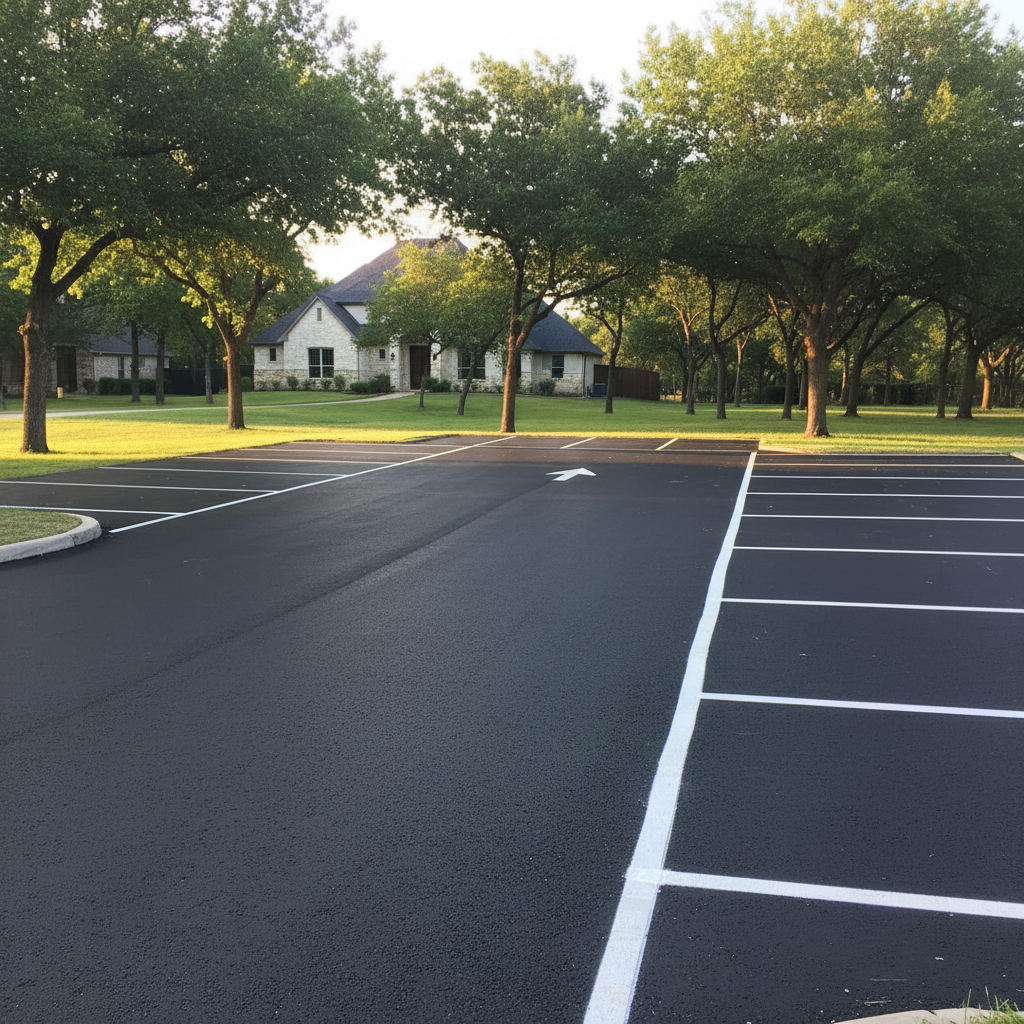
So, you've got a new asphalt driveway or parking area, or maybe you're just sprucing up an old one. Striping seems pretty straightforward, right? Just paint some lines. Well, I've been doing this for a long time here in Leander, and I've seen plenty of folks stumble over what looks like simple stuff. These mistakes can really cost you extra money, time, and a whole lot of frustration. Let's talk about what to watch out for.
Mistake #1: Not Knowing Your Local Rules
This is a big one, especially if you're dealing with a commercial property or even a large residential one that might have specific access points. Leander has its own set of zoning ordinances and fire codes, you know. You can't just stripe parking spaces or fire lanes any old way you want. I've seen projects get held up because someone didn't bother to check the city's requirements for things like ADA-compliant parking spaces or the width of fire lanes. You might think it's just paint, but if it's not up to code, you'll have to redo it. That's a waste of good money and good paint. Always—and I mean *always*—verify the local regulations before you even think about putting down the first line.
Mistake #2: Choosing the Wrong Paint for Our Leander Weather
Central Texas weather is no joke. We get scorching summers, sudden downpours, and sometimes even a freeze. Not all asphalt paint is created equal, believe me. I've seen folks go with the cheapest option, thinking "paint is paint." But if you use a low-quality, non-durable paint, especially one that can't stand up to our UV rays or heavy rain, your crisp new lines will fade, chip, and look terrible in no time. You'll be repainting sooner than you expect. You need a high-quality, acrylic-based traffic paint that's designed to withstand harsh weather and vehicle traffic. It costs a little more upfront, sure, but it lasts way longer. It's an investment, not just an expense.
Mistake #3: DIYing Without the Right Tools or Experience
I get it, you're handy. You've watched a few YouTube videos. You think, "How hard can it be to paint a straight line?" Harder than you think, buddy. Professional striping isn't just about having a steady hand. It requires specialized equipment—things like line striping machines that apply paint evenly and at the right thickness, stencils for arrows and symbols, and proper layout tools to make sure everything is spaced correctly and straight. Plus, you need to know about surface prep. If the asphalt isn't clean and dry, the paint won't stick properly, and you'll end up with peeling lines. I've seen more wavy, uneven, and quickly deteriorating DIY jobs than I can count. Save yourself the headache and the embarrassment. This is one of those jobs where calling in a pro really pays off.
Mistake #4: Not Getting a Clear Plan or Quote
Before any paint hits the pavement, you need a detailed plan. What exactly are you striping? How many parking spaces? Are there fire lanes, accessible parking, or directional arrows? Where do they go? A good contractor, like us at Absolute Asphalt Inc, will walk the site with you, discuss your needs, and provide a clear diagram and a written quote. If a contractor just gives you a number over the phone without seeing the property or asking detailed questions, that's a red flag. You need to know exactly what you're paying for and what the finished product will look like. Surprises are great for birthdays, not for construction projects, right?
Mistake #5: Ignoring Surface Condition
This goes hand-in-hand with DIY, but it's also something a bad contractor might overlook. If your asphalt surface has cracks, potholes, or a lot of loose aggregate, striping over it is like putting lipstick on a pig. The paint won't stick well, and the underlying damage will just keep getting worse, making your new lines look terrible and fail prematurely. Before any striping, the surface needs to be clean, dry, and in good repair. That means patching cracks, filling potholes, and sweeping away debris. If a contractor suggests striping directly over a damaged surface, you should probably find someone else.
Look, getting your asphalt striping done right isn't rocket science, but it does require attention to detail and a bit of know-how. By avoiding these common mistakes, you'll end up with a professional, durable job that lasts, looks good, and keeps your property safe and compliant.